
INDIA bloc parties are set to raise issues such as the Pahalgam attack, US President Trump's claims of brokering a ceasefire, and concerns over electoral roll revisions in Bihar during the Parliament's Monsoon session.

Bihar Chief Minister Nitish Kumar on Thursday condemned the torching of 34 houses, mostly belonging to SC/ST communities, in Nawada district and asked the Additional Director General of Police (Law and Order) to visit the site and oversee the probe.

Union Minister and Lok Janshakti Party-Ram Vilas leader Chirag Paswan is planning to convene a meeting of Scheduled Caste MPs of different parties as he works to mobilise support ahead of his party filing a review plea in the Supreme Court against its judgment allowing sub-categorisation of reservation within the community.

Activist Manoj Jarange's hunger strike demanding Maratha quota continues for the third day in Mumbai, following a meeting with a government delegation. The protest has caused traffic disruptions and highlights the ongoing debate over reservation policies in Maharashtra.

Unless Governor Ravi or the Union of India moves in appeal, seeking a hearing by a constitutional Bench, this is where it all will have to end, observes N Sathiya Moorthy.
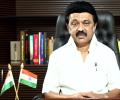
Tamil Nadu Chief Minister and DMK president M K Stalin announced that his party will file a case in the Supreme Court against the Waqf Bill passed in the Lok Sabha. The opposition AIADMK expressed solidarity with the DMK's stance, while the BJP members staged a walkout from the Assembly in protest. The CM argued that the amendment was passed at the behest of a few allies despite opposition from majority parties and that it is an attack on the Constitution and religious harmony. The DMK claims the bill threatens the autonomy of the Waqf Board and the Muslim minority population.
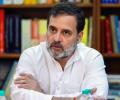
The Supreme Court of India reprimanded Congress leader Rahul Gandhi for his remarks about Vinayak Damodar Savarkar, calling them "irresponsible." The court stayed criminal proceedings against Gandhi in a case filed in Uttar Pradesh for his comments but warned him against making such statements in the future. The court also asked Gandhi's lawyer if he was aware that even Mahatma Gandhi used terms like "your faithful servant" in his communications with the British.

Activist Manoj Jarange vows to intensify his hunger strike for Maratha reservation under OBC, while the Maharashtra government seeks legal opinion on the issue.

The Supreme Court of India has released an inquiry report into the alleged discovery of a large amount of cash at the residence of Delhi High Court judge Yashwant Varma. The report, which includes photos and videos, was uploaded on the court's website. Chief Justice of India Sanjiv Khanna has formed an in-house committee to investigate the matter and has asked the Delhi High Court Chief Justice to not assign any judicial work to Justice Varma. Justice Varma has denied the allegations, claiming they are part of a conspiracy to frame him. The inquiry report, submitted by the Delhi High Court Chief Justice, has been made public and calls for a deeper probe into the incident. The incident has raised concerns about judicial accountability and has prompted the Congress party to call for strong measures to uphold public trust in the judiciary.

The Central Bureau of Investigation (CBI) alleged in the Supreme Court on Thursday that there was an attempt to cover up the rape and killing of a post-graduate medic at Kolkata's RG Kar Medical College and Hospital by the local police as the crime scene was altered by the time the federal agency took over the probe.
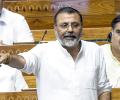
Fourth-term Bharatiya Janata Party MP Nishikant Dubey, one of the more vocal party members in the Lok Sabha, launched a broadside against the Supreme Court on Saturday, saying Parliament and state assemblies should be closed down if the apex court has to make the laws.
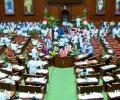
The Karnataka Legislative Assembly passed a Bill providing 4% reservation for Muslims in public contracts, sparking protests from the opposition BJP. The Bill, which amends the Karnataka Transparency in Public Procurements (KTPP) Act, aims to increase Muslim participation in government contracts valued up to Rs 2 crore for civil works and Rs 1 crore for goods and services. The BJP criticized the move as unconstitutional and vowed to challenge it in court.

The Supreme Court of India expressed shock over a viral video showing an eight-year-old girl fleeing her shanty as it was demolished by a bulldozer during an anti-encroachment drive in Uttar Pradesh. The court mentioned the video while hearing a case concerning illegal demolition in Prayagraj. The incident drew criticism from opposition parties, while local authorities defended the demolition, citing court orders and multiple notices issued to the encroacher.

A three-judge Supreme Court bench will hear petitions challenging the constitutional validity of the Waqf (Amendment) Act, 2025, on April 16. The petitions, including those by politicians and the All India Muslim Personal Law Board (AIMPLB) and Jamiat Ulama-i-Hind, were filed in the top court challenging the validity of the newly-enacted law. The Centre has filed a caveat in the apex court, seeking a hearing before any order is passed.
It will be court's opinion versus the legislative power to enact law, the Supreme Court on Wednesday said as it posted the pleas challenging the appointment of the chief election commissioner and election commissioners under the 2023 law on February 4.
The Supreme Court will hear on February 19 pleas challenging the appointments of the Chief Election Commissioner and Election Commissioners under the 2023 law. The court will take up the matter on a priority basis, after some urgent listed matters. The government has appointed a new CEC and ECs under the new law, which excludes the Chief Justice of India from the selection panel, despite a 2023 Supreme Court verdict directing the inclusion of the CJI in the panel. The petitioners argue that the exclusion of the CJI undermines the independence of the election commission.

The Enforcement Directorate (ED) on Wednesday searched locations in Karnataka, including educational institutions linked to state Home Minister G Parameshwara, as part of a probe into alleged gold smuggling-linked money laundering case against Kannada actor Ranya Rao and others. The ED sources said an educational trust is suspected to have "diverted" funds and made a payment of Rs 40 lakh towards the credit card bill of Rao, allegedly on the instructions of an influential individual. The sources claimed the trust is linked to Parameshwara and the "influential" individual is a politically exposed person. The searches found there were no supporting vouchers or documentation to "substantiate" this payment (for credit card bill payment), they said.

The Supreme Court has sought details from the Allahabad High Court regarding controversial statements made by Justice Shekhar Kumar Yadav at a VHP function. The development comes amid calls for action against the judge for his remarks, which have been labeled as hate speech by some. The judge's statements were made at a VHP function on December 8, where he spoke about the Uniform Civil Code and the law working according to the majority. Several individuals and organizations, including lawyer Prashant Bhushan and CPI(M) leader Brinda Karat, have called for an inquiry into the judge's conduct and for his removal from judicial duties.
The Supreme Court of India has sought the government's response on a Public Interest Litigation (PIL) that challenges the appointment process of the Comptroller and Auditor General of India (CAG), arguing it's unconstitutional. The PIL, filed by the Centre for Public Interest Litigation, claims the current process, solely through executive appointment by the Prime Minister, undermines the CAG's independence and violates constitutional principles. The court, while acknowledging the importance of institutional trust, questioned the extent to which it should intervene in the appointment process and whether this would constitute rewriting constitutional provisions. The PIL suggests the CAG's appointment should be similar to other independent bodies, with a selection committee comprising the Prime Minister, Leader of the Opposition, and Chief Justice of India. The case has implications for the independence and transparency of India's audit system.
The Allahabad High Court Bar Association has begun an indefinite strike to protest the proposed transfer of Delhi HC judge Yashwant Varma, who is under investigation after a large amount of cash was found at his residence. The Oudh Bar Association (OBA) of the Lucknow bench of the High Court has also condemned the transfer, calling for impeachment proceedings against Justice Varma. Both bar associations are concerned about the impact on public faith in the judiciary and have called for a reconsideration of the transfer decision.

According to a senior police officer, the man has been detained and further inquiry is underway.

Kodikunnil Suresh, the Opposition's pick for the Lok Sabha speaker who will go up against the Bharatiya Janata Party's Om Birla, is a Congress veteran, an eight-term MP and one whose election in 2009 was declared invalid by the Kerala high court before being restored by the Supreme Court.

Her claims of being detained overnight at the police station without food or sleep and being asked to drink toilet water by police personnel have sparked widespread outrage.

The Supreme Court of India has agreed to hear on May 6 the pleas of the Kerala government against the governor over the delay in approving bills passed by the state assembly. The court will consider whether the issues raised in the Kerala petition are covered by a recent judgment on a similar plea by Tamil Nadu, which set timelines for governors and the President on granting assent to bills.
The Supreme Court collegium has confirmed the transfer of Delhi High Court Justice Yashwant Varma to his parent Allahabad High Court. This decision comes after an inquiry was initiated against Justice Varma regarding the alleged discovery of a large amount of cash at his official residence. The transfer recommendation was made public in a resolution uploaded on the Supreme Court's website. The alleged cash discovery occurred following a fire at Varma's residence in Delhi on March 14, 2025. The apex court collegium, headed by Chief Justice Sanjiv Khanna, has also constituted a three-member inquiry committee to further investigate the matter.
Prime Minister Narendra Modi on Wednesday vehemently defended Home Minister Amit Shah against the Congress' accusation that he insulted B.R. Ambedkar in a Rajya Sabha speech. Modi asserted that Shah had actually exposed the Congress' "dark history of insulting" the architect of the Indian Constitution. The prime minister went on to detail a litany of actions by the Congress party that he claimed demonstrated their disrespect for Ambedkar, including denying him a Bharat Ratna and preventing his portrait from being displayed in Parliament's Central Hall. He also criticized the Congress for failing to address the plight of marginalized communities during their time in power. Modi highlighted the efforts of his government in implementing Ambedkar's vision and honoring his legacy.

The Supreme Court has adjourned pleas challenging the appointments of the chief election commissioner (CEC) and election commissioners (ECs) under the 2023 law. The court indicated the matter would be listed after the Holi festival break due to a paucity of time. Petitioners, including the NGO Association for Democratic Reforms, argued for an urgent hearing, emphasizing the importance of the issue and the potential impact on democratic processes. The appointment of the new CEC and ECs under the 2023 law, which excludes the Chief Justice of India from the selection panel, has been a point of contention, with petitioners alleging it undermines the independence of the election commission.
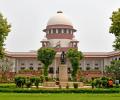
The Supreme Court will hear a plea seeking an independent selection process for the Comptroller and Auditor General of India (CAG) on March 17. The PIL, filed by the Centre for Public Interest Litigation, argues that the current system of appointment solely by the executive and the prime minister violates the Constitution and undermines the CAG's independence. The petition calls for a transparent process involving the prime minister, Leader of the Opposition, and Chief Justice of India. The PIL contends that the CAG's role as a watchdog over government finances requires a fair and non-arbitrary appointment procedure.
The Supreme Court of India will likely hear a batch of petitions challenging the constitutional validity of the Waqf (Amendment) Act, 2025 on April 15. The Act, which came into force on April 8, has been met with widespread criticism from various stakeholders, including politicians, the All India Muslim Personal Law Board (AIMPLB), and Jamiat Ulama-i-Hind. They argue that the law is discriminatory and violates the fundamental rights guaranteed under Articles 25 and 26 of the Constitution. The petitions allege that the amendments give the government more control over the administration of Waqf, effectively sidelining the Muslim minority from managing their own religious endowments.
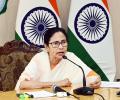
West Bengal Chief Minister Mamata Banerjee has defended her support for teachers who were dismissed following a Supreme Court verdict, accusing the BJP and CPI(M) of "hatching a conspiracy" to influence the ruling. She dared the BJP to arrest her for supporting the affected candidates, while asserting that her government will abide by the verdict but explore all legal options. The development has triggered political reactions with the BJP demanding Banerjee's resignation, while the CPI(M) expressed concern over the impact on the education system. Banerjee also criticized the BJP's handling of the Vyapam scam in Madhya Pradesh, drawing parallels to the school jobs scam in West Bengal.

The Supreme Court of India has ruled that governors cannot indefinitely delay giving assent to bills passed by state legislatures, setting a timeline of one to three months for their actions. The court said the governor must act "as soon as possible" and that failure to comply with the timeline will make their inaction subject to judicial review. The ruling comes as several opposition-ruled states have accused governors of delaying assent to bills passed by their assemblies.
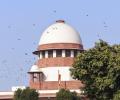
According to the list of business uploaded on the apex court website, the plea of opposition parties would be heard on April 5 by a three-judge bench headed by Chief Justice of India D Y Chandrachud.
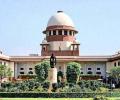
The Supreme Court of India has scheduled a hearing on February 19 for pleas challenging the appointment of the Chief Election Commissioner and Election Commissioners under the 2023 law. The court emphasized the potential consequences if any action is taken before the hearing. The pleas argue that the 2023 law, which excludes the Chief Justice of India from the selection panel, undermines the independence of the Election Commission and allows for undue influence from the executive branch. The court's earlier verdict in March 2023 called for an independent selection panel comprising the Prime Minister, Leader of the Opposition, and the Chief Justice of India to ensure the integrity of the Election Commission. The case highlights concerns about the independence of India's electoral process and the potential for political influence in the appointment of key election officials.

The sources in the government said the notification announcing the name of the next CEC could be issued "in the next few hours".

The ruling BJP in Madhya Pradesh will hold a three-day training camp for its leaders from June 14 in Pachmarhi in Narmadapuram. The move comes amid the party facing flak for some statements from its leaders post Operation Sindoor. BJP president JP Nadda and Union Home Minister Amit Shah have been invited to the camp to lecture the party cadre. The BJP said the event was pre-planned and was a routine affair, but the camp is seen as an attempt to discipline party leaders who have been making controversial statements.
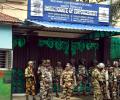
The Supreme Court has announced it will decide in April whether to reconsider its 2022 verdict upholding the Enforcement Directorate's powers to arrest and attach property under the Prevention of Money Laundering Act (PMLA). The court is hearing a batch of pleas seeking a review of the July 2022 verdict, which upheld the ED's powers of arrest and attachment of property involved in money laundering, search and seizure under the PMLA. The verdict came on a batch of over 200 petitions filed by individuals and other entities questioning various provisions of the PMLA.

The BJP had registered a one-sided victory on all the 17 SC-reserved seats in the 2014 Lok Sabha elections. But in 2019, out of these 17 seats, it lost Nagina and Lalganj seats to the Bahujan Samaj Party.

Both the Lok Sabha and Rajya Sabha were adjourned till 2 pm after opposition members held protest in Parliament seeking a discussion on the issue.
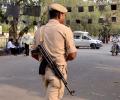
The opposition Congress in Assam has accused the BJP government of running a "police raj" after official data revealed that 72 people were killed and 220 injured in police actions since Himanta Biswa Sarma became the chief minister in May 2021. The Congress has demanded that the Supreme Court take suo motu cognisance of the data and investigate the alleged fake encounters in the state. The data shows that a total of 256 police actions have been taken between May 2021 and February 2024, resulting in the deaths of 38 people in police remand and 34 more while in custody but before remand. The Congress has alleged that the ruling party is using the police for political gains, while the government has defended its actions, stating that police cases have been registered in each incident and that the NHRC guidelines have been followed.
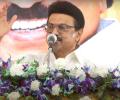
"Permitting students to discontinue studies is akin to asking them not to study," Stalin said, addressing an event organised by the Parents-Teachers Association in Cuddalore.
